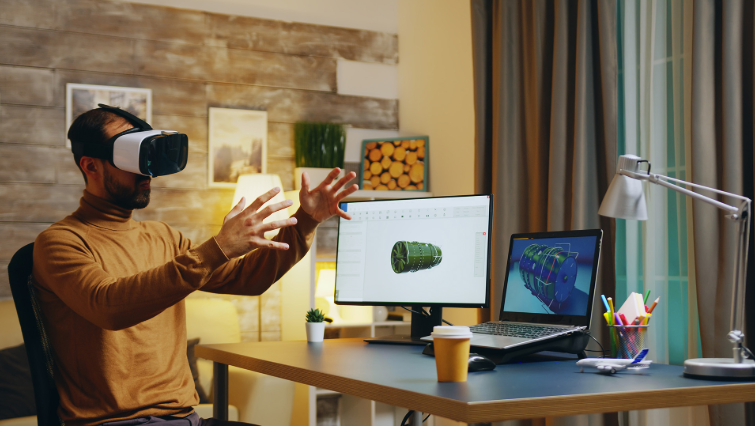
The Role of VR in Remote Collaboration
Virtual Reality is reshaping the landscape of remote collaboration. Its ability to create immersive environments enhances communication and fosters engagement among team members. Unlike traditional video conferencing, VR allows for dynamic interactions that can stimulate creativity and problem-solving. However, the implementation of VR poses significant challenges, particularly concerning costs and user adaptation. As organizations explore these complexities, the future of VR in workplace collaboration remains a compelling topic for consideration.
How VR Enhances Team Communication and Engagement
As organizations increasingly adopt virtual reality (VR) technologies, they discover that VR significantly enhances team communication and engagement.
The Benefits of Immersive Collaboration in Remote Work
Immersive collaboration through virtual reality (VR) offers numerous benefits that redefine the remote work landscape.
It fosters enhanced virtual brainstorming sessions within immersive environments, allowing teams to interact creatively and intuitively. This engagement transcends traditional video conferencing, promoting a sense of presence and connection.
Ultimately, VR empowers remote workers to collaborate more effectively, unlocking innovative solutions and enriching the overall work experience.
Challenges of Implementing VR for Remote Collaboration
While VR has the potential to revolutionize remote collaboration, several challenges hinder its widespread adoption.
Technical limitations, such as high costs and hardware requirements, create barriers for many organizations.
Additionally, user adoption remains a critical issue, as individuals may be reluctant to embrace unfamiliar technologies.
Overcoming these challenges is essential for harnessing VR’s full potential in enhancing remote teamwork and productivity.
See also: atompace
Future Trends: The Evolution of VR in Workplace Collaboration
The ongoing challenges of implementing VR in remote collaboration have sparked innovation and evolution within the field.
Future trends indicate a shift toward immersive virtual environments that enhance user interaction. Emerging collaborative tools will empower teams to brainstorm and strategize in real time, transcending geographical boundaries.
This evolution promises to redefine workplace dynamics, fostering a greater sense of presence and connection among remote participants.
Conclusion
In conclusion, Virtual Reality is poised to redefine remote collaboration by fostering deeper engagement and communication among team members. Notably, a study found that 75% of remote workers believe VR tools enhance their teamwork experience, highlighting the technology’s potential to bridge geographical divides. As organizations navigate the challenges of implementation, the promise of immersive collaboration suggests a transformative future where teams can innovate more effectively, ultimately reshaping the landscape of remote work and productivity.