
Traditional vs Infrared: Which Sauna Heater Suits a Beginner
A traditional heater warms the room air using heated stones, usually reaching 150 to 195 degrees Fahrenheit with brief bursts of steam from water poured over the rocks. An infrared panel skips the stones and warms the body more directly through infrared wavelengths, running the room itself at a lower 120 to 140 degrees. For a first-time buyer, the practical differences that matter most are electrical requirements, heat-up time, and how the two styles feel once you are inside, not just the temperature number on a spec sheet.
What Actually Happens Inside Each Type of Cabin?
Step into a traditional sauna and the heat is in the air itself, radiating off hot stones and rising toward the ceiling, which is why upper benches always run hotter than lower ones. Ladle water onto the rocks and a burst of steam briefly spikes both the temperature and the humidity, a ritual called löyly that traditional users tend to consider central to the experience. Step into an infrared cabin and the air stays noticeably cooler while infrared panels heat the skin and tissue more directly, with little to no added humidity. Some beginners find the lower air temperature of infrared easier to tolerate for longer sessions; others miss the steam and the more intense heat of a stone-based room.
How Does the Electrical Setup Compare?
This is often the deciding factor for a first purchase. Traditional heaters sized for a typical home cabin, generally 4.5 to 9 kW depending on room volume, need a dedicated 240-volt circuit installed by an electrician, along with proper breaker sizing and wire gauge for the load. Infrared panel systems are usually lower draw, often under 1.6 kW total, and many plug into a standard 120-volt outlet without any new wiring. If a garage or basement corner already has an available circuit, that single fact can make infrared meaningfully simpler and cheaper to get running, independent of which heat style someone would otherwise prefer.
How Long Does Each Type Take to Get Ready?
Infrared panels generally reach a usable temperature in 10 to 15 minutes, since they only need to warm the panels and the air enough to feel effective rather than heat a full rock bed. Traditional heaters with a proper stone load typically need 30 to 45 minutes to bring both the room and the rocks up to temperature, since the stones themselves are doing a lot of the heat-holding work. For someone planning quick, frequent use around a busy schedule, that difference adds up over a month of sessions. For someone who treats sauna time as a slower ritual, the wait is often part of the appeal rather than a downside.
What Does Rock Capacity Change About the Traditional Option?
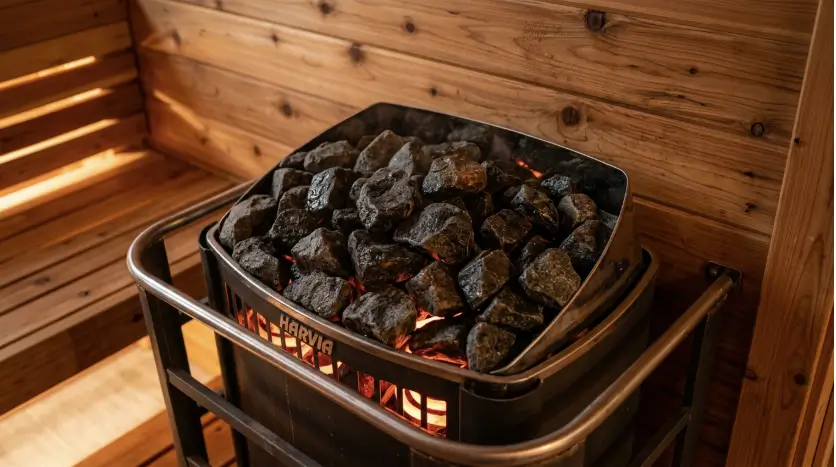
A traditional heater’s stone bed, usually 40 to 100 pounds of sauna-grade rock loaded loosely for airflow, is what lets it hold heat and produce steam on demand. That rock mass is also why traditional heaters cool down more slowly after use and why they benefit from a few extra minutes of preheat before the first session of the day. Infrared systems have no equivalent thermal mass; panels reach temperature quickly and drop just as quickly once switched off, with nothing to reheat or refill. Neither approach is objectively better here, but it changes how each unit behaves across back-to-back sessions in the same evening.
What Clearance and Safety Details Differ Between the Two?
Traditional heaters need a fixed guard clearance from benches and walls, typically a few inches on the sides and more in front of the unit, to keep wood and skin a safe distance from exposed heating elements and hot stones. Infrared panels mount flush or near-flush to the wall and generally have simpler clearance requirements since there is no open heating element or loose rock bed to guard against. That makes infrared a somewhat easier retrofit into a tight closet or converted room, while a traditional heater usually wants a purpose-built cabin with clearances planned in from the start.
How Should a Beginner Actually Decide?
Start with the electrical reality of the space: if running a new 240-volt circuit is not feasible right now, infrared is the more practical near-term choice regardless of preference. From there, weigh heat-up time against how the sessions will actually get used; frequent short sessions favor infrared’s faster warm-up, while a slower, ritual-style evening sauna favors the stone-and-steam experience of a traditional heater. It also helps to compare specific models side by side before buying, since wattage, control style, and cabin sizing vary a fair amount between units marketed as similar. Working through current options at a dedicated sauna retailer makes that side-by-side comparison easier than piecing it together from general home-improvement listings that only carry one or two models.
Does the Research Favor One Type Over the Other?
A 2018 systematic review in Evidence-Based Complementary and Alternative Medicine and a 2018 review in Mayo Clinic Proceedings both summarize findings tied to traditional Finnish-style sauna bathing at higher temperatures with steam, which is where the bulk of the cardiovascular and longevity research sits. Infrared use is newer to Western markets and has considerably less dedicated long-term population research behind it specifically, which does not mean it lacks benefit, only that the evidence base is thinner and mostly extrapolated from general heat-exposure research rather than infrared-specific cohort studies. A 1998-through-2018 body of work summarized in a 2001 American Journal of Medicine paper on the benefits and risks of sauna bathing also centers on the traditional format. None of this rules out infrared as a reasonable choice; it just means someone buying primarily for the research-backed cardiovascular association is buying closer to what the studies actually measured with a traditional stone-based heater than with a panel system.
Frequently Asked Questions
What is the main difference between a traditional heater and an infrared panel? A traditional heater warms the air via heated stones, typically 150 to 195 degrees Fahrenheit with steam. An infrared panel warms the body more directly at a lower air temperature, usually 120 to 140 degrees, without stones or humidity.
Does a traditional heater need a special electrical circuit? Most 4.5 to 9 kW traditional heaters need a dedicated 240-volt circuit. Many infrared panel systems under about 1.6 kW run on a standard 120-volt outlet.
Which type heats up faster? Infrared panels generally reach usable temperature in 10 to 15 minutes. Traditional heaters with a full stone load typically take 30 to 45 minutes.
Is one type backed by more research than the other? Most published cardiovascular and longevity research follows traditional Finnish-style bathing at higher temperatures with steam. Infrared has less dedicated long-term population research specifically behind it.
References
- Clinical Effects of Regular Dry Sauna Bathing: A Systematic Review, Evidence-Based Complementary and Alternative Medicine, 2018
- Cardiovascular and Other Health Benefits of Sauna Bathing: A Review of the Evidence, Mayo Clinic Proceedings, 2018
- Benefits and risks of sauna bathing, The American Journal of Medicine, 2001
By Rachel Osei